Friday, April 04, 2008

Success with the cover


Thanks to Carole Townend, I learnt that WH Smith online now carries the HMB covers. So now hopefully the lovely warm sensualness of Viking Warrior, Unwilling Wife will be apparent.
I have also put the cover on my myspace page.

Thursday, April 03, 2008

Frustration

I received a jpeg of the cover for Viking Warrior, Unwilling Wife yesterday from one of my lovely editors. It looks lovely and a copy now adorns the wall behind my computer...for inspiration. And it is an inspiring cover...

I have attempted to put it on the blog BUT every time, it comes out in reverse tones. It looks interesting, but it is not the warm sexy feel that is the cover. The important thing for a cover is the mood or the feel of the cover, the promise it gives. And this one promises a sensual romantic read. Plus the hero is bare chested.
I have no idea is if it was originally commissioned for another book, but I just like the cover and the mood fits the book.

I only have permission to use the on sale version, so you can't see the reverse colour version.
At the moment, Amazon.co.uk does not have the cover up either, so you all will have to wait...until 1 May when it appears on the M&B website...

Sometimes, these things are just beyond the control of an author.

Wednesday, April 02, 2008

April newsletter and contest

I have sent out my April newsletter today and as usual, it does have exclusive contests for people who are signed up to my newsletter. This time the top prize is a signed hardback of Viking Warrior, Unwilling Wife. The closing date is 15 April. If anyone does sign up in time for the contest, I will send out a copy of my newsletter wit hthe detail of how to enter. You can find the sign up on the sidebar of this blog. The newsletter also includes my recipe for Lemon curd and its variation -- raspberry curd. I am currently suffering from a surfeit of eggs...

Advanced notice: Kate Walker will be having a blog launch party for the second edition of her book 12 Point Guide to Writing Romance on 8 April. If you want a good primer guide to writing category romance, this is an excellent one. I know her thoughts really helped me when I was writing The Gladiator's Honour. She will be doing a number of giveaways and I have contributed the prize of a signed copy of Sold & Seduced as well as a signed copy of the book that gave me the idea Kate's The Antonaxos Marriage.

Tuesday, April 01, 2008

Taken by the Viking is heating up April


Taken by the Viking is out in both paperback and ebook on eharlequin. It is also part of their April is heating up promotion. It is nice to think that E-harlequin consider Taken to be sizzling.
It also means that having started, I need to keep the current Viking sizzling as well. A certain standard has been set.
Hopefully people will enjoy it...I had fun writing it.
Currently though, I have cut one scene and am wrestling a few more as I try to keep the focus on the romance and not let it go spinning off into the politics.

Monday, March 31, 2008

Branding and me: a recap

I have been thinking about branding. My website is going to have a makeover soon, and a slogan popped into my head -- Passionate about history, passionate about romance. It works for me. I suspect other people have used it but it does sum up my two passions in writing.
But it is still all about my books. And the tagline will never appear on my books. Therefore, it has limited use in actually driving anything at the Point of Sale.
As Holly Jacobs points out in her article in the most recent RWR -- Not Another Author's Article on Promotion her tagline has been Holly Jacobs: where love is a laughing matter... It has had to change as she is now concentrating on more angst emotion. She is now left with trying to reinvent her brand image. Her new tagline reads Holly Jacobs: where love is a laughing ...except when it isn't.
The problems with rebranding are well known and that is why sometimes authors opt for different names when they are writing different genres.
There are pros and cons to this approach btw. And it is a question of how a great crossover audience. One of the great all time multiple personalities/branded authors was Victoria Holt who wrote straight historical as Jean Plaidy, gothics as Victoria Holt and family sagas history as Philippa Carr. The stories are all very different. Barbara Michaels uses the pen name Elizabeth Peters for her crime novels and Barbara Michaels more for her gothics. She uses her real name for her non fiction.
Anyway, I like my tagline but I am not sure what I want to do with it.
I am not looking forward to redoing my website, but I suspect I could organise things better...
But ultimately the thing that will drive my book sales is writing quality books and I need to finish the first draft of this Viking. For one thing, I want to get to the emotinally satisfying ending.

Sunday, March 30, 2008

Ernest Thompson Seton

On Tuesday, BBC2 will broadcast a programme about Ernest Thompson Seton, one of America's early environmentalists. He was born in South Shields, Durham, grew up in Canada and spent the end of his life at Seton Castle near Santa Fe New Mexico. And as it happens someone my father knew as a boy when he lived in Santa Fe. Seton was an old man at the time, and my father always spoke of him with awe.
I can remember watching the Walt Disney movie about Lobo the wolf and my father getting out Wild Animals I Have Known and showing me Seton's signature. Seton had signed the book for my grandfather and had included a picture of a hangman's noose with the words -- hang Hitler. My grandfather was an officer in the US navy. My grandmother and father had moved to Santa Fe during WW2 because my father suffered from asthma. Seton lived a few miles from Santa Fe. My father as a boy was quite active in the boy scouts which may be why they knew him. Seton was one of the founding members of the Boy Scouts and wrote the first Boy Scout manual among other things. However, at that point, Santa Fe was not a large place...
My father was very impressed with him and had me read Wild Animals I Have Known after I watched the programme. Seton was a natural storyteller and brought the various animals to life, so it was a delight to read.
The book now sits proudly in the bookcase in the dining room. My children have all enjoyed the stories. And it is a book that should be read by anyone interested in natural history and conservation.
Seton's daughter Ann wrote historical romance novels under the pen name of Anya Seton. I did not realise this until yesterday, but thought it interesting.
Anyway, I shall look forward to watching the programme. Seton's book apparently had a profound influence on David Attenborough. And he deserves to remembered.

Saturday, March 29, 2008

The necessity of conflict rather than goals

After the end of the first series of Ashes to Ashes, I was left pondering -- why wasn't it as good? Was it because Keeley Hawes is not as talented as John Simm? What was different? And the answer quite simply is conflict.
The Alex Drake character is never placed under pressure or forced to make impossible choices.
Her motivation and purpose is to get back to her daughter, and she feels that if she can discover why her parents died, she can save herself. Sounds great, but the viewer does not see her being put under pressure and forced to make hard choices. Neither does the viewer see the longing for the world she has been forced into.
With Life on Mars, Sam Tyler develops a genuine affection for 1973, and begins to become part of the world. One never feels that Alex Drake is there and that she sliding down the same slippery slope that Sam faced.
Equally the explanation of why the car blew up is not very well foreshadowed. You do not see Alex remembering odd snippets. And things suddenly do not become clear in her head. Her father's actions therefore seem out of character. He is never fully developed. He never gets the chance to play the Shadow. As an aside, the writers were also confused on whether or not her parents were both barristers or her mother was a solictior. In the last episode they are called both called barristers, previously it had been made clear that the mother was a solicitor.
In other words, the conflict was weaker. And yet on the face of it, the need to return to see her daughter should make for a huge conflict. A woman trapped in a world who wants to get back to see her child. But that need to be with a child means that it overwhelms everything and she can not be genuinely conflicted. A conflict only happens when a character wants two separate things. If they choose one, they can not have the other. Alex Drake only has one choice -- she wants to see her daughter. She has a goal, not an over arching conflict. She does not have to choose between her daughter and life. Or her daughter and her parents. Or her daughter and saving the world. Or even her parents who she knows die and a new friend. And one never feels like she might have a chance to make it back. Or at least change her future and make sure that the bullet misses. Or suddenly realise that the man who has taken her daughter away is actually responsible for the death of her parents and the man she has trusted all her life is the true Shadow, and is manipulating her. And that she has to stop him before he can have her killed. But that if she does not return to her own present, she will be dead and her daughter in danger.
Sam Tyler had a genuine conflict that grew and changed through out Life on Mars, Alex Drake doesn't. And that is down to the writers not forcing the hard choices. they have been too kind to her. It was like they had a great idea and it did not go anywhere and so it devolves into a series of vignettes with no overarching plot.
It is also something that I need to remember in my work. The temptation sometimes is to have a lot of sound and fury but to shy away from the hard choices, the choices that reveal true character. It is also important to keep my eye on the spine of the story and to make sure things move forward. And that I do not keep too much hidden for too long.

Friday, March 28, 2008

A Four star review from the RomanticTimes


The very lovely Michelle Willingham passed along the information that The Romantic Times has given Taken by the Viking a four star review in its May issue.

I breathed a sigh of relief when I read the review. The synopsis was correct. And Taken was rated hot. In other words, I had managed to hold the reviewer's attention.
I have been working on the lushness of my sensual scenes, particularly since The Roman's Virgin Mistress was only rated mild...And I do like a lush sensual scene...And it was/is more a matter of me improving and working on that in order to get the reader to have a great experience.

There again, I do think I am still improving in other areas as well. It is part of the wonderful mystery of the medium. I also like Twyla Tharp's imagery of the clock face, and how you work on polishing different things, then you get back to the top and start polishing again.

The key take away line in the review was Styles' descriptive writing and jump-off-the-pages characters shine in this awesome story. It is really wonderful when a reader thinks that and I am so pleased the story worked for her.

It is also an added boost as I am currently working on my third Viking and want this one to be every bit as good, if not better. It is also a reminder for me to focus and to make sure the read is good. Ultimately, the thing that is important is providing a good quality read and I am so pleased that the reviewer enjoyed Taken.
For those of you who are interested in such things, Michelle Willingham has an in depth interview with Harlequin Historical editor, Joanne Carr up on her blog. It makes for fascinating reading.

Thursday, March 27, 2008

Fire Up the Quattro one more time


The Telegraph reports today that Ashes to Ashes has been commissioned for a second series. Hooray for the Powers that Be at the BBC for actually understanding and appreciating that this series has legs.
Tonight is the finale of Season 1. I am really looking forward to it. While not being as good as Life on Mars ( and I suspect that is because the individual story lines are not as robust), it remains one of the best things on television, chiefly because of Philip Glenister.

Glenister is a hugely talented actor and it is wonderful to see him getting the recognition that he deserves.

Plus, it is fantastic to have an alpha male character that remains true to his code of honour, instead of being metro sexual or somehow compromising his core beliefs. The appeal of Gene Hunt echoes the appeal of the hero in romantic fiction. And it is not the looks as much as strong integrity. The knowing you can count on him when the chips are down and that he will fight for his beliefs and his team. It is a fantasy as much as anything as the thought of living with an unreconstructed alpha male in real life is quite frightening. But if you can understand the appeal of the uber alpha male, you can understand the appeal of Gene Hunt.

Wednesday, March 26, 2008

Pleased about the Rita finalists

The Rita finalists are officially being announced today but he calls went out yesterday. Several of my friends have made the finals and this made me very happy indeed.
Cheryl St John is a finalist in the novella category for Christmas Day Family from A Western Winter Wonderland. It is an excellent story full of Christmas spirit. It proves why Cheryl is one of the top Western historical writers.
Natasha Oakley has made the contemporary series finals with her Niroli book. Her stories are so heart warming and I can remember Natasha being worried when it came out...
Hedi Rice also made the finals with her The Mile High Club. It is currently out now in the US with the title of The Millionaire's Blackmail Bargain. And is an excellent fun read. I loved the press conference bit. Heidi used to work for a tabloid and so certain bits rang true.
Sam Hunter is in the Contemporary Series Suspense finals for Untouched (which I haven't read) but will have to get a copy.
One of the great things about the Rita finals is that I generally get to do some Amazon shopping based on the books, but this year, I have read or have in my TBR pile a number of the books that made the cut. I must say that I preferred The Serpent Prince to The Leopard Prince (Elizabeth Hoyt's nominated one) but if you haven't read Elizabeth Hoyt, and you like Georgian romps, you should. She was my big find of last autumn.
Anyway congrats to all.

Monday, March 24, 2008

The Roman's Virgin Mistress in French


Thanks to Joelle, a reader in France, I learnt that La Rose du Colisee (The Roman's Virgin Mistress) is up on the Harlequin France site.

Before anyone says anything, I do know the cover was recently used for Juliet Landon's The Warlord's Mistress. The various different Harlequin offices have full access to all the artwork and they are able to pick and choose the artwork that they feel will be best suited for the book in that particular market. And the cover has such a very lovely seductive feel that I am thrilled the French thought it could fit my book.

The blurb for La Rose is:
République romaine, 69 av. J.-C. Veuve, la belle Silvana dirige avec son oncle une maison de plaisirs. Aux yeux de tous, elle offre l’apparence d’une femme comblée. Nul ne sait que son oncle est couvert de dettes et que la ruine les menace. Courtisée par de riches soupirants, dont le jeune et fougueux Eutychus qui veut l’épouser, elle répugne pourtant à faire un mariage d’intérêt. Mais, un jour, l’arrogant cousin d’Eutychus, Lucius Fortis, proche de Jules César, vient lui proposer un marché : il fera d’elle une femme riche pourvu qu’elle s’engage à renoncer à Eutychus. Humiliée d’être prise pour une créature vénale, Silvana refuse.…


You can purchase it here.


My friend Jen Black told that when you go into the French hypermarkets, they have long rows of the covers and they are quite a site to see.

Saturday, March 22, 2008

The care and feeding of the plotted plant.

In writing, rationalisation is everything. Having the reader accept and understand the why behind actions helps the reader suspend disbelief and stay connected to the story.
Early foreshadowing and plants of information mean that characters are able to act in a manner some might consider odd or in extreme cases too stupid to live. But because the reader understands the reasoning, they accept.
For example, in A Noble Captive, I needed a horn to be blown at the end in an attempt to summons the god Neptune. I also needed readers to be aware of its significance and what help was expected. And I needed the hero to have the knowledge and to be able to use it. So I had to weave it in through the story, but hopefully in not such a way that it was telegraphed.
One of the parts about Dan Brown's Angels and Demons that I disliked was how he telegraphed that the hero was going to need something. Little did he suspect that in a few days such information would come in handy... or words to that effect.
An example of a less telegraphed plant is in the movie Romancing the Stone, before the heroine Joan Wilder leaves to go to Columbia, her editor tells her that her books do very well down in those macho countries. Then later when Joan encounters the drug dealers, it makes sense when the man says -- the Joan Wilder. A throw away comment early on allowed the plot to move forward later.
Many times, planting ideas/abilities/beliefs in the early part of the story enables other things to happen later. These can be planted as you write the story. Or you can go back and weave it in. Sometimes when you are writing, you have to use backward logic. In other words -- ah, I need this to happen, but how can I make sure that the reader is not surprised or taken back or thinks the characters are too stupid to live (or the converse too intelligent to be believable).
Care should be taken that if you do plant something in the reader's mind that you use it in the story. The plants help define the story's world and its rules. If you make one rule early on, and then you decide to break it., you do need to give an explanation why. For example, if you have stated that your heroine never ever goes out at night without a torch in the beginning, and she does. You have to show the reaction, and the reasons why. Otherwise the reader is left scratching her head.
The key to plants is the reader remembers. Details are important. But they should be done subtley rather than hitting the reader over the head with it.
I am grateful to Swain and Creating Characters for reminding me of this fact.

Friday, March 21, 2008

Dossier before or after?

Today I am also blogging at Tote Bags and have given my recipe for Hot Cross Buns, in case anyone is interested.

When reading Swain's Creating Characters, I was so grateful that he explained the difference between dossier before and dossier after writers. There are reasons why I do love Swain's approach to writing.
Dossier before writers need to know everything about their characters BEFORE they begin writing. Some writers will go so far as to say that they need to know if the character will prefer apple pie or cherry pie. Everything is planned out and charted. Detail character sheets are filled in. Characters' histories are traced from cradle to that moment of beginning and some times beyond. A lot of time and effort goes into this.
I don't work that way. It sends my daemon running for cover and I sit staring a blank screen.
Like Swain, I am a dossier after writer. I discover things and get to know my characters as I write. This means that I will sometimes have to do back rationalisation, but it is the way I work. I start with a rough idea, a few character sketches, certain details, a rough outline of where I think the story should go and then I write. As I get further in, I put more details in as my choices get narrowed. Then later, in the editing , I go back and make sure the details are correct. It is one of the reasons why I love my editor as she does take the time to point out details. And because I know she does this, I do try to be more attentive and less slap dash.
Neither method is wrong. It is all in what works for you. BUT at the end of the first draft, the writer should know the characters really well, and should be able to fill out a dossier without having to ponder. The question of whether or not they actually do, is up to the individual.
Both methods have their pluses. And it is a smart writer who figures out the best method for their own work habits.
A dossier before writers is the sort of writer who is far better suited than I am to writing a continuity or contributing to a long running series or serial. Writers who write these types of books are given bibles which detail events that have happened previously. These bibles can run to many pages. Think beyond romance to Nancy Drew books or Star Wars novels. So before the writer begins her particular story, she knows that the hero once had a fight with a man down the street for example. Or went to a certain school etc etc. It can not be changed as it was in the previous book and the author has to deal with it.
And some authors are brilliant at it.
I can't or rather suspect that I would find it difficult to work with other people's characters. I have a very hard time colouring within the lines. I do not use this method for my own stories and so would find it hard to adapt.
Much of the filling out of a dossier seems to me to be make work. I would far rather be writing the story. It does mean I can change things more quickly than if my character is written in stone before I start. BUT it also means that I do have to be careful when I am editing that everything is rationalised and given a meaning -- in other words, the why has to be there.
Luckily with writing, it is possible to change and adapt. Logic can run backwards. Some parts of writing are unforeseen. Detailed planning will not necessarily save the writer from sudden flashes of inspiration and does the writer truly want to be saved? Trying to over guess can lead to the process taking longer. Anyway, my daemon works this way and so I just go with the flow.
Anyway, tomorrow, I will talk about plotted plants and why they are a necessity -- for both before and after dossier writers.

Thursday, March 20, 2008

More ducklings and a new writing book

The cry went up yesterday morning -- Ducklings! Seven ducklings!
My heart sank. The same duck who had successfully reared the autumn ducklings managed to sit through the ice and the snow and emerge with seven ducklings. Sigh. They are very cute -- five brown ones and 2 yellow ones. And they were difficult to herd into the oldest duck house. Seven balls of fluff zooming everywhere.
Yesterday, I also had a package from Amazon. My TBR pile runneth over, but I now have the last two books in the Raintree trilogy and Anne McAllister's latest.
On the writing side, a book on character traits arrived -- The Writer's Guide to Character Traits by Linda Edelstien Phd. It is basically a book of lists. For example, she lists all the traits of amnesia. From a brief look, the type you find in a romance novel tends to be physiological amnesia either dissociative, fugue or psychogenic. She also lists ways in which memories can be falsely implanted. There are also lists of traits of certain jobs, including for some reason -- kept woman.
Anyway it looks to be a useful book.
The second writing book -- Creating Character How to Build Story People is by Dwight V Swain. As it was written in 1990, the language is far more palatable than the earlier Techniques of the Selling Writer. It is also a thoroughly useful book. For example, he gives the 7 most common reasons for readers failing to suspend disbelief. Fiction as Swain points out is founded on the reader suspending disbelief. If they stop/are pulled out of the story, the writer has a problem. The seven main reasons are: failure to hold viewpoint, failure to do enough research, telling instead of showing, gaps in the motivation/reaction sequence, failure to plant or foreshadow things, giving your characters things to do that the reader finds distasteful, and making the main characters less than likable.
The book starts with Swain explaining the one key element every major character must have -- the ability to care.
Anyway, I have a lot of time for Swain and this book looks to be excellent. A master class not on the traits that go into making a character but on the hows and why. What works and doesn't. In many ways, it is more thorough than Debra Dixon's Goal, Motivation Conflict. Or perhaps I just like his style better.

Wednesday, March 19, 2008

Branding and me

Kay Stockham wrote an interesting post on the Pink Heart Society about the need for branding and in particular, the need for an author to know her tag line.

As you can see from the top of this blog, I don't bother with tag lines. Yes, I write historical romance novels, but really how I describe my historical romances is not necessarily how my readers would describe them. However I do hope they are engaging page turning reads that allow the reader to escape into the world of the story for a few hours.

The best way to understand what my writing is about to read them, or at least read the blurbs and excerpts and see if they pique your interest. If they do, great. I hope you get as much satisfaction and joy from them as I do writing them.

My product is my books. It is not business cards, book marks or magnets. And I firmly believe that it is the quality of the content that keeps my readers coming back to my books. If I put out books at regular enough intervals, hopefully readers will remember me and think -- ah I really enjoyed her last one. Also hopefully readers will think, ah I am going to tell my friends about her books because they gave me such enjoyment, or I know that so and so likes romances or history, I am going to tell her about the books. And I am going to ask my librarian/bookseller to tell me when the next book is out.

The converse is also true, if a reader did not get the enjoyment out of my books then no amount of clever merchandise will make her pick up my next book. My last book helps sell my next book.

The other problem with having an individual strap line is that it would need to be there at point of sale -- i.e. on the book cover. That is not going to happen.
Marketing at Harlequin Mills & Boon have their own ideas about what goes on the front and the back, and they have their own positioning for me. The covers exude a mood, and a promise about the content. Writing series books means that I can take advantage of the hard work that the publisher has put in to build that series brand and trust. Single title authors have other challenges, but again I would argue that it is about the point of sale, rather than the brand that is on your website. It is about the cover and blurb at the back.

Authors build readership by delivering a quality product. Authors deliver written content. It is all about giving the reader satisfaction. It is all about growing that unique sub set of readers -- the ones who when they close the book think -- I want to read another one by that author, wow what a great enjoyable page turning read. And if they do buy another book, and get the same experience, the author's readership grows. The biggest names have been delivering on their unique promise for years.

Content is king.

The best way for an author to grow her brand is to deliver a high quality product on a timely basis. So I need to go and write my wip as that is ultimately what I want to sell.

Tuesday, March 18, 2008

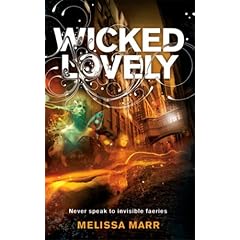
Wicked Lovely


I am have just finished Wicked Lovely by Melissa Marr. My dd was given the book for Christmas and has been lobbying hard for its sequel -- Inkexchange. It is an Urban Fearie book aimed at the older young adult market. There is much to like about the book, and although I became irritated at the inconsistencies of her world and sometimes it was hard to see if things were being foreshadowed for future books or were simply ideas that were not followed up on... But my dd would claim that I was nitpicking and being pedantic. It was an engaging page turning read...if sometimes the characterisation was slight and she had so much external conflict that the emotional conflict was lost. And I will admit to an ewww moment when it turns out the Summer King had previously had designs on her mother. And I found it hard to see past the hero's piercings so I wish she had not dwelt on them as much.

I will admit a long standing weakness for such tales and Marr does craft her book well. I certainly enjoyed it more than Jonathon Strange and Mr Norrell. As with most faerie books, it does explore the Tam Lin myth. For example Diane Wynne Jones Fire and Hemlock delves into the same territory. Sometimes, I wish they would explore other myths/legends to do with social fairies. Or maybe I just gravitate more to these sorts of stories...

According to The Lore of the Land (Westwood and Simpson), there are two classes of fairies in English folklore -- social fairies who exist in courts and household fairies who co exist with humans. The tale Herla and how he visited the court of the pygmy king is one of the older Rip van Winkle myths. Another great myth is of the fairy bride who must not be reprimanded or else she will disappear. (see for example the tale of Edric Salvage -- a landowner listed in the Doomsday book and his fairy bride) Sometimes, in these stories, the women are selkies and the man keeps hold of the skin until it is accidentally found and returned.
Simpson and Westwood point out the whole concept of social fairies with wings tends to be a late concept. Early medieval literature tends towards being able to fly without wings. An older word is elf. As an aside, in the Norse sagas there is a part of southern Sweden known as Alfhiem. They were said to be taller than average and very beautiful. But it does beg the question were the tales about elves used to explain the kidnap of various different girls by Norse raiding parties? Britain was a well known place for Norse slavers...
It is said that the explanation of fairies was used for many of the abandoned Roman sites. Also the whole concept of fairy lucks expanded after the Reformation, in part it is said to preserve various items of the Roman Catholic faith (most of the lucks are goblets).
Anyway, it was an excuse to delve into some of my folklore tales. English tales are different from Norse and Celtic tales btw. My dd loved Wicked Lovely and although I keep telling her to write to Melissa Marr and tell her so, thus far she has declined. A pity because I feel certain all authors like to hear when people enjoy their books.

Monday, March 17, 2008

The Jamie Oliver Effect

I understand from yesterday's Sunday Telegraph that do the high profile campaign by Jamie Oliver and Hugh Fearnley Whittonstall against battery chickens, houses where chickens can be kept are becoming more popular.
I have kept hens and ducks for about ten years now. The difference in egg quality is astonishing. Hens who are able to roam have far darker yolks. Nothing beats a freshly laid egg gently poached. Supermarket eggs are a watery pale yellow yolk and don't really taste of anything.
I noticed that the latest Waitrose magazine was offering duck egg recipes. Hooray say I. Other people are realising that duck eggs are good to eat. They suffered in reputation after the war because ducks were fed on fish meal and surprise, surprise the eggs tasted of fish. Feed ducks on corn and poultry layer pellets, and the eggs taste great.
Duck eggs do not keep as long as hen eggs by the way. You want to use them within 2 weeks, where as hen eggs will keep for about 3. Both are best eaten within a few days of being laid.
Mostly you can substitute duck eggs and hen eggs. But scrambled duck eggs tend to be rubbery. Poached duck eggs are wonderful though and they have several recipes for baked duck eggs including one for duck eggs baked in a tomato with a dash of Tabasco.
So are hens and ducks easy to keep? Yes but you have not mind the cleaning out of the houses once a week. The manure is good for the garden. Because my hens and ducks are free range, I have made sure that the vegetable patch is fenced off, and during the summer, we do put netting up to prevent any rogue attacks on the vegetables.
We also have a large enough garden that they do not seem to do any real and lasting damage. They do add character to the undergrowth and I have not seen a slug in years. they are fed twice a day -- poultry layer pellets in the morning and mixed corn in the afternoon. Eggs are collected once a day. Hens by in large are creatures of habit and do lay in the hen house...although I do have to go searching on occasion. Ducks tend to drop their eggs where ever unless they are broody.
Currently I am hoping we will not have ducklings...it is getting to be that time of year...
But hooray that more people are coming to realise the value of keeping poultry.

Sunday, March 16, 2008

Going back to the enneagram

I am currently about half way through my wip and woke this morning, thinking I need to check my enneagrams and make sure that I know where my hero is.
Now because he is a Viking, he is an uber-alpha male. He needs to be in charge. This means that he is some of an 8 -- the leader, the challenger. He is not going to be a helper. He is a protect and defend sort of person. But he is also my third Viken. In the other books he played slightly less of a leadership role as it was not his story. he was however co-equal with the other jaarls.
But I don't want to write the same hero. So what type of 8 is he?
There are three instinctual variations among each type -- self-preservation, social and sexual. An instinctual variant is where a character's concerns are mostly going to be played out. Everyone is a combination of all the variants. It just depends which one dominates.
Self preservation means that character is most concerned getting and maintaining the physical. They like to acquire things, and work hard to make their environments comfortable. They tend to be concerned about paying bills. In other words, these people are practical.
Social means the dominate trait is safety in numbers. These people like participating group activities. They like to get involved and they also like to know their place in the hierarchy. How do systems work. However much they enjoy interacting with people, they are also likely to avoid intimacy. Lots of friends but few good friends. These are community oriented.
Sexual -- this does not mean people who are sexy or sexually driven. It means their desire for intimacy and intensity dominates. They tend to follow their attraction.
Riso and Hudson in The Wisdom of the Enneagram use a party situation to illustrate how the types might behave in the same setting -- self preservation types notice the temperature, the food, where you can sit comfortably. Social types speak to the host and to people who might be able to help them, they are likely to be aware of the social structure of the party. Sexual types are after intense experience and are looking for interesting people, people they are drawn to, even to the extent of ignoring important obligations.
So within the 8 range which is dominated by the needs to control/protect and defend -- the self preservation type can be thought of the survivor and can be territorial about possessions. Highly competitive. I would say that Vikar from Viking Warrior, Unwilling Wife fits in this range.
The social -- goes for camaraderie -- trust and honour are big, holding court, making pacts with people.
The sexual -- takes charge in relationships and see intimacy as a struggle for control. They like a challenge and lose interest if they win too easily. They can enjoy being *bad*. Haakon in Taken by the Viking is much more of this type.
So does this mean that Ivar should be more of a social type? So should I attempt to make him more of a wing type personality.(ie rather than being a pure 8, should he be more a combo of a 7&8)
Anyway, it is something more for me to think about.

Friday, March 14, 2008

Beyond Her Book blog party

The ever so lovely and inspirational Barbara Vey is having a blog party today to celebrate her first anniversary of her blog on Publisher's Weekly. She has over 75 books in giveaway prizes to those people who comment on the blog.
I enjoy reading her blog every morning, and really recommend popping over, if only to see what is on offer.
And if you want to be inspired to lose weight, go back in her archives and read about her tremendous weight loss. It certainly gave me courage!
Well done Barbara.

In my news: my US copies of Taken by the Viking arrived. They are really lovely and I do like the inside front cover. That picture has helped inspire my current wip.

Thursday, March 13, 2008

Thinking about titles

Nicola Marsh has a lovely post on the Pink Heart Society about titles and how she feels about titles.
Now, I will hold my hand up. I do buy books based on titles and covers. I know years ago as a teenager, I used to look for those Presents titles that had something to do with Greece and possibly forced marriage.
As I have grown older, I have come to understand the reasoning behind positioning and the need to appeal the floating core readership -- those readers who regularly read the series, but do not necessarily buy every title. And I do understand that certain key words make it more likely for the floating readers to pick up the books. Ultimately both the author and the publisher wants to sell as many books as possible and to those readers who will come back to that author and publisher. It is about growing core readership, not about getting the respect of some reviewer who does not like romance or necessarily understands the needs of a dedicated romance reader who has five seconds to decide what sort of book she is going to buy to read on her lunch break.
I also understand the need to have a title that enables the writer to write a book. These are not necessarily the same thing.
I have had two titles kept -- The Gladiator's Honour and A Question of Impropriety. Both titles came to me immediately, so it is interesting that the editors also liked them. The main thing I need with a title is to be able to write the book. At times, I have had to change the title as it no longer conveys my short hand for the story. And when I am writing the story, it is all about me, and how I can write it. After that, the book is written and it is up to marketing to decide what is going to best sell the content. It is no longer my responsibility. And quite frankly I am pleased as I think I am rubbish at titles.
There are a variety of reasons why a particular title may not be used. For example -- Her Viking Captor became Taken by the Viking because in part my title was far too close to one of the very recent Viking titles -- His Viking Captive and the editors did not want to confuse the readers. Viking, however, is a key word as it does make a connection with the time period and conveys certain things.
Sometimes, the title does not fit precisely the mood that the editors want to convey so they come up with a better one. For example Sold and Seduced is a lot more sensuous than The Pirate's Bargained Bride. And gosh, I wish I had thought of that title as it beautifully conveys the book. Alliterative titles can be fantastic.
Sometimes key words that have done well in other books are repeated. For example Conquered by the Viking became Viking Warrior, Unwilling Wife after it was noticed in sales trends that books with Warrior in them did well. But also it does convey tone and plot.
The editors and marketing work very hard at getting the titles and covers right. Sometimes, they do this better than others. But it should be remembered which segment of readers they are trying to appeal to. The titles which are most often derided tend to belong to the consistently most popular series. In other words, they work for the vast majority of that subset of readers. And if a title seems to belong to another line, they may walk passed it.
Because titles are a marketing function, they do have to speak to the core group of readers who will most likely buy the book. That is the bottom line. I certainly do not want readers of Historical romance to pass my books by.