There is an inspirational blog called Sweat it with Sven. Barbara Vey mentioned it on her blog -- Beyond Her Book. It is all about writing a novel between 60 -100 k in 70 days. This works out to between 850 - 1,500 words per day with seven days off. Several hundred writers have signed up to the programme.
I looked at that and thought -- is that sweating it? And what is with the days off bit? Great idea and all power to the pen of those who have signed up, but it is not for me.
Currently I am feeling vaguely dissatisfied with writing 1000 per day. I think I prefer between 1,500 -2500 per day. And at the end, I write very fast indeed because I want to get there. Signing up for something like this or the NaNoWriMo tends to make my daemon go on holiday. Go figure.
But the important key is writing every day. Most highly successful writers write every day, maybe taking Christmas off. Ernest Hemingway, John Steinbeck, and George Bernard Shaw spring to mind. There was a lovely article in the Smithsonian recently about Hemingway and his secretary, and how he used to growl out his word count for the day if he had had a bad writing day. I do write every day. Or do something writing related with my novels every day -- proofs and revisions/plotting out a new book all count.
In many ways, it does not matter how much you write. Some days the words flow and others you are lucky to get a paragraph. The key is to write. Like anything, writing becomes easier the more you do it. And yes, I know that lots of people have other jobs/roles in their lives. BUT I discovered that once I made the commitment to write every day on my current wip, no matter how little, I found that I was suddenly able to write. I have also discovered the physical act of writing down my word total in my Daytimer is useful. (The flip side of this is that sometimes I do less because I know at over 30 k, my speed increases)
It is all a matter of desire. How much do you want to tell this story? How much do you want to get it done? There is always some reason why you can't write. Or why you deserve a break.
Lots of things have gone by the wayside for me. I no longer do as much needlework, nor do I tend to play computer games. My evening reading is often research related, rather than reading a magazine. You can carve out bits of time. Desire, dedication, discipline and determination all play roles.
Lots of novels have been written on trains, during lunch breaks or on the kitchen table as the children did their homework. Sometimes, novelists are more productive when they are forced to fit their work around life because they know that they only an hour to write. Or even five minutes to get a sentence down. 100 words is a good target for some people.
I should note that some people like kicking targets into touch. So they always to exceed their target and other people like having an aspirational target. Sometimes, it is useful to set a minimum number of words and a maximum. For example I will write at least 500 words and no more than 3,000 words today sort of thing.
And what happens when you exceed your target -- you stop. You make a few notes, and you walk away from the computer, trusting that the daemon will be there, anxious to get started. Balance is important.
My other trouble with these things is that it makes me feel like a rabbit in the headlights. Or if I see that someone is so far ahead, I begin to think what does it matter? And the Crows of Doubt start cawing.
Actually in many cases, it is the quality and not the quantity that is important. A fast book is not necessarily a great book. You should never sacrifice quality for speed. Different writers have different natural speeds. Some writers naturally write faster than others.
As one of my editors said to me, they are trained to try and get the best of a writer and to prevent burn out or prevent the writer from standing in the corner, going quietly mad. Each writer is different.
With writing, it is all about knowing your own working habits and what works for you. It is not about trying to emulate some other writer's speed. It is about trying to produce a high quality product for your shop window so that your readers keep coming back and back.

Wednesday, March 12, 2008

Tuesday, March 11, 2008
Sometimes things don't change all that much

Among the things I received yesterday from Mills & Boon was a reasonably detailed history of the company. In it, it is made very clear that the company has ALWAYS been very keen to find new authors. BUT it has never been easy. There has NEVER been a golden age for unpublished authors where everything gets published. EVER.
In 1912, 1000 slush manuscripts were submitted, of that no more than 6 were actually published by Mills & Boon, according to a Charles Boon interview with the Daily Citizen. 75% of the manuscripts were by women and 95% by unknown authors. In other words, even way back then, it was not easy to become published with Mills & Boon. I think the statistics have become slightly worse for new authors but there again, the computer and other aids to writing have happened. I think about 1 in 1,000 is taken on. I know the editors would dearly like to find more new authors. There is always a shifting pool of authors -- because authors are real people and real people have real problems and sometimes their direction in writing changes. But every month, HM&B has to fulfil its promise to the readers.
The only thing a would be HM&B author can do is to concentrate on writing the best possible novel that fits the guidelines. And if you really want to know what the important part of the guides are: look at the strap line. For example Historicals is Rich vivid and passionate, brings the past to life. Modern Heat is sizzling, stylish sensual -- the ultimate temptation. Modern is glamorous and sophisticated, seduction and passion guaranteed. Desire is passionate, provocative and powerful. Intrigue is danger, deception and desire. And so on. Figure out what these words mean in the context of the novels and you will figure out the promise HM&B makes to its readers. It is all about fulfilling that promise.
M&B has known for a long time what their particular niche market is -- romance fiction. They do not publish guys with gear who go books. And as Alan Boon once explained to an agent -- we would, indeed, have to turn down Shakespeare if he sent one along. In other words, Mills & Boon publish Romance Fiction and if they are offered other types of fiction, no matter how good, they will not publish it. The Mills & Boon brand is Romance Fiction. The parent company may publish other sorts of fiction, but what is published with the Mills & Boon logo is Romance.
It is that focus that has made the company's success. Know your market is maxim that works well for writers.
It will help improve your chances of being published. Think where will most of my readers come from. Cross over books are fine, but they are hard to market. Ultimately, you are writing for a core market.
All the branding of the HM&B lines does is to identify the core markets and to state via the strap line what sort of promise the reader can expect to be fulfilled.
Monday, March 10, 2008
Mills & Boon Centenary Gift Items


I received a packet from Mills & Boon today, detailing some of the interesting items that have been produced for the centenary.
One is a 1000 piece jigsaw puzzle featuring ten Mills and Boon covers from Ravensburger. Sarah Stevens of Ravensburger said "Many of our loyal puzzlers are also fans of Mills & Boon novels, so like the heroes and heroines of the books, ours is a perfect match."
I know my children are fans of puzzles and we always have one on the go. Recently I discovered the Jigsaw Puzzle Gallery and sure enough, they have copies of the Mills & Boon puzzle in stock. They also have a special promotion on -- buy 3 1000 or 1500 piece puzzles from Ravensburger and get the cheapest one for free. Just right for the upcoming Easter holidays...
There are the greeting cards from Peachey Keen, a divison of The Greetings Factory. They are highly amusing but I am having trouble finding them online. So I can't give a link...
Apparently there will other items coming as well...
The other big promotional item are the packs of money off coupons -- good for use in the UK or on the Mills and Boon website. They sent me 2 books of the coupons. I will be giving them away in my next newsletter which comes out in early April...
The other big promotional item are the packs of money off coupons -- good for use in the UK or on the Mills and Boon website. They sent me 2 books of the coupons. I will be giving them away in my next newsletter which comes out in early April...
Sunday, March 09, 2008
The Calm Before the storm
High winds and lashing rain are supposed to hit England tomorrow. Half of me wonders if it will be a damp squib. Will it actually be the lowest pressure that England has ever experienced? Will the entire country be ravaged by winds likeit was in 1987? Or will people shrug and say -- that is this it?
Basically, if you foreshadow something too much, when it actually happens, the reader is a bit disappointed. Was that the BIG secret? Or was that ALL?
In writing as in weather forecasting, there is a fine balance to be struck. You want people to be alert and cautious but not overly panicked. There of course, there is always the possibilty that they made a mistake and it is going to be far worse...
Curently I am hoping the weather forecasters have over predicted. I have no wish to experience winds greater than the ones we have been having lately.
Spiring has sprung up here a bit and it means that the ducks are starting to build nests. I am SO hoping that the measures we put in place will eliminate the duckling problem, but I see one lovely white duck did not go to bed last night... Unfortunately the very beautiful fox I saw the other night up near the New Alston crossroads may get attracted...Then there is the sparrow hawk that has been hanging around. Sometimes, I wonder why we keep ducks...but then I'd miss them if they were gone...Ducks seem not mind bad weather...
Saturday, March 08, 2008
Frustration
I did a lovely a post all about the casting of heroes only for it be eaten. Complete with photos of Daniel Craig in different roles to illustrate the point that actors play many roles and each brings different qualities to a role. But it was eaten in cyberspace. ARGH!
I do have my monthly column up at the The Good,the Bad, and the Unread. it goes by the lovely title of March BITES literate podpeople which made me smile.
I do have my monthly column up at the The Good,the Bad, and the Unread. it goes by the lovely title of March BITES literate podpeople which made me smile.
Friday, March 07, 2008
Sharpening the Point
One of the things I do when I am adding subtle layers of meaning is that I am also attempting to sharpen the point of view. In other words, I am attempting to make the scene more personal to the point of view character, so that the reader can clearly understand whose POV.
This means thinking about what makes the character who he or she is. What words would they uniquely use, how do they view the word and how can I best translate that on to the page.
Sometimes, it can be useful to decide which words go with which character. What metaphors/similes/symbols. How does their world view and experience colour the way they see the world. A rake who loves horse racing will use different words from a civil engineer, or from a Viking. A Viking who believes in the Aesir will see different things than someone from the Christain tradition. Indeed they will see things differently from the Romano-Greek mythological tradition. Even their gestures have the potential to be different. This can be done before you begin to a certain extent, but with me, the full flowering of a character is often not evident until the first draft is done. Often little things take on significance as the story moves forward. Sometimes, I know at the start which things they will be, and sometimes I don't. And sometimes, I need to tweak them after my editor has given me her thoughts...
She felt unhappy about what had happened could describe any character in any time -- A single tear trickled down her cheek. She allowed it to linger.
'Some day I will regain my freedom,' she vowed, clenching her fists. 'I will not remain this Viken's slave forever.' describes a specific moment in a specific character's life, in this case Annis from Taken by the Viking.
There are several different exercises you can do. The most useful I have found is in Donald Maass' Writing the Break Out Novel Workbook, it involves opening your novel at random and deciding whose point of view you are in, and how you can sharpen that point of view -- either through a gesture, a thought, the timely use of a word etc. In other words, how can you make sure the scene isviewed more clearly through the POV character's eyes. This exercise is addition to the other great exercise of his for adding tension. These sorts of exercises take place in the final bits of editing for me, when I am working off screen. And yes, it does take time, but at that point I know my characters very well and it becomes fun.
First drafts for me are always hard as they are always to a certain extent writing into the mist. I may have a vague idea of where I am headed, but I do leave plenty of scope for changing and layering the subtle meanings and gestures.
Thursday, March 06, 2008
Layers and layers
There are several different types of layers in my writing world. I think sometimes, I may confuse people when I use the word. It needs to be seen in context.
First of all there are plot layers. These are different plot lines for the main characters to enact that are different then the main plot line. they are not complications to the main plot, but can impact on the main plot. They are also not subplots. Subplots are enacted by secondary characters, but plot layers are different problems for the main character to solve. It means that more than one thing is happening to the main character.
So in A Christmas Wedding Wager, Emma has several different plot layers. Some of these are: 1. She is attempting to get the bridge built and struggling against a number of forces.
2. She is forced to confront her place in society and decide where she wants to be. 3. She also needs to protect her father and to ensure the company survives. 4. the main spine of the story -- her growing relationship with Jack. It should be note that Jack has several layers as well.
The main spine has also layers and complications. In other words, it is never straight forward. In ACWW for example, the relationship is coloured by events from seven years. Events that each has a different memory of. With complications, you need to think how can I make this worse for the protagonist. And ultimately, how can I make this relationship fail...
Secondary characters may have several different layers, but they will have fewer layers than the main characters or basically they will take over the story. As an aside it should be noted that secondary character are often seen through the filter of a protagonist's point of view so they may appear flatter than they actually are. Every character is the hero of his or her own story.It just depends on which story the writer is telling.
The way I bring the plot layers and subplots into the main spine is called the nodes of conjunction. In other words how is the thing woven together. This is when scenes/places/characters are made to do double or triple duty. Story is all about conjunction and connection and not coincidence. Coincidence may play a part, but ultimately the story needs to driven by action/reaction. Donald Maass in his Writing the Break Out Novel Workbook has several useful exercises for helping with this.
Then there are the writing layers and subtexts, the subtle shades of meaning. As McKee says -- there is a maxim in the theatre if this scene is about what it seems to be about, then it is in trouble. There needs to be more. There needs to be depth.
I write fast. I tend to get down those things that I need to get the story written. Then I go back and add what is needed to up the tension. Story is one place where logic can work backwards. You reach the end, and suddenly you think -- ah that is why this or that was important. You then go back and make sure the foreshadowing is there. You can add (or indeed take away) emotion and meaning. In other words, unlike life, the writer can go back and change the past.
So hopefully you can see that there are layers and then there are layers.
I would argue strenuously that category novels are just as likely to have layers, and that it is all in the execution. Because of the length of a series novel, and the need for focus on the main spine, it may have fewer subplots. But again it depends on the skill of the writer.
Wednesday, March 05, 2008
Looking for the less obvious
First of all, as I know some people do not read comments, I would like to thank Isabel Swift for leaving two comments and highly recommend people take the time and trouble to read them. As one would expect of a vice president of Harlequin and highly experienced editor (including at one stage Nora Roberts) the comments are pithy and to the point as well as being wonderfully reassuring, particularly about the Crows of Doubt!
One thing that I think authors sometimes forget is that editors have a share in readers, and that their aim is to provide the best possible read for their readers. I for one loved her concept of handholds for readers. And handholds in the concept of places to hang hats, or grips as one is climbing a rock face. Things to make the reading experience more enjoyable, so that the reader does not fall out of the book. But they also need to be subtle so that the reader just accepts it and the story flows.
In her second comment she also focuses on the less obvious and how she uses the mantra about donuts.
Now I know when I get my editors' thoughts, I try to focus on the why behind the remarks and try to discover what bit is not working. Is the scene that is highlighted? What is it about the scene that doesn't work? And where I have gone wrong? Also how can I fix it and still keep true the story I want to tell... And sometimes, an author is just far too close to the story...
For example when I came to do revisions to Taken by The Viking, I had a late sensual scene. My editor wrote back congratulating me for attempting it, stated how lovely it was but that it didn't quite work. The basic problem was that at point in the story, there was no sexual tension, or at least not in the same way as it had been earlier. The obvious answer might have been to up the tension. However, it was also a warm lovely moment and needed to be that way for what came next...so I chose the less obvious (and I believe stronger way) of making that moment really lovely, warm and tender and therefore making what comes next all the more poignant. Luckily my editor at the time agreed with me.
In another place in Taken, I knew something was wrong but could not put my finger on it. There were reasons why I thought the scene should be in Haakon's POV. I knew that it wasn't right. My cps had told me that it missed, but could I see the solution? However, my editor said -- actually, it will work far better in Annis's. And she was right. In that case, I had been focusing on the hole and not the needs of the story.
Ultimately, it is the flow of the story and the reader's experience that is overriding concern. satisfied readers mean they are likely to return to your books, and indeed books published by a specific company.
Oh and Donna mentioned subtexts. But that is a whole another blog about the need to have a scene work as hard as it possibly can, and the need for layers...
Tuesday, March 04, 2008
Keep your eye on the donut
I have a new mantra, courtesy of Isabel Swift. Keep your eyes on the donut, and not the hole. She kindly shared her words of wisdom in the comments section of her latest blog.
Isabel's blogs are always interesting, and currently she is doing a series of editor profiles. It is one of the blogs I always check.
What the saying means is to keep focusing on telling the best story possible. If it works, don't fix it, and do not get to didactic. If it doesn't work, then you can start looking at the reasons why, but why fix something that isn't broken. The flow of the story is important.
As I, like a number of other writer friends, have been suffering from the Crows of Doubt lately, it is what I needed to hear.
The most important to my editors and to my readers is to deliver the best donut (i.e. the best story) possible.
Intuition and instinct play a big part in story telling. You nknow when something feels right. It is just sometimes the cry of the Crows is so loud that it drowns out the lure of the donut.
Monday, March 03, 2008
Two different sorts of dictionaries

As some writing friends told me about Random House Word Menu by Stephen Glazier, I decided to order it as well as a flip dictionary.
A word menu is a reference dictionary organized by subject matter, rather than in alphabetical order.
So for example there is a section on advertising and it gives all the words that are associated with the profession, plus their meaning. Or a section the home where all the different parts of a room, or even different words for rooms are listed. Or there is a section on the verbs to do with motion.
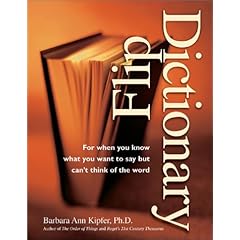 The Flip dictionary is a dictionary based on clues or cues rather than alphabetic order. So if you know there is a word for a scented mixture in a bag or box -- you can look it up and find pomander, sachet.
You want to know the science of law -- jurispurdence, the science of housekeeping is oikology btw
Or sea, person unfamiliar with --landlubber
sea robber -- buccaneer, corsair, freebooter, pirate, privateer
confiscate for miltary use -- commandeer
Both are highly addictive for different reasons and this should help my word choice no end.
Both are highly addictive for different reasons and this should help my word choice no end.
Saturday, March 01, 2008
Siete dias sin besos --Sold and Seduced in Spanish

I have discovered that Sold and Seduced is out in Spanish. You can buy it here.
Siete dias sin besos translates as Seven days witout kisses and refers to the wager between Lydia and Aro. So it makes sense. Sometimes, I am not so sure the titles make sense, but it is beyond my paygrade. I write the content.
The blurb is as follows:
Siete días sin besos (ROMANOS)
Roma, año 68 A.C.Lydia Veratia había cometido un error y ahora su libertad pertenecía a un hombre al que conocían en toda Roma como Lobo de Mar. Una vez comprada como esposa, Lydia sabía que lo único que aún podía controlar era su deseo. Por eso cuando Fabius Aro le prometió que la dejaría a libre si después de siete días no le había suplicado que la besara, Lydia pensó que sería muy fácil.Pero Aro era un hombre increíblemente atractivo y Lydia empezaba a sentirse más y más tentada por aquellos labios…
Roma, año 68 A.C.Lydia Veratia había cometido un error y ahora su libertad pertenecía a un hombre al que conocían en toda Roma como Lobo de Mar. Una vez comprada como esposa, Lydia sabía que lo único que aún podía controlar era su deseo. Por eso cuando Fabius Aro le prometió que la dejaría a libre si después de siete días no le había suplicado que la besara, Lydia pensó que sería muy fácil.Pero Aro era un hombre increíblemente atractivo y Lydia empezaba a sentirse más y más tentada por aquellos labios…
Friday, February 29, 2008
Switching Points of Views v Headhopping
One of the so-called rules that I often hear about from unpublished writers is the sin of head hopping. Often they do not understand what head hopping is, and apply it to any switch in point of view during a scene.
True head hopping is jumping from character to character without telling the reader whose head you are in, and without regard to the build up of reader identification with the character. Remember that the reader is always searching for a character/hero to identify with. They want that connection.
Let me say that truly powerful story tellers can and do switch points of views in the middle of scenes. Some like Larry McMurtry or Peter Ackeroyd or Terry Pratchett switich quite often. Nora Roberts is another author who springs to mind. But they are all superlative story tellers. Ultimately, the story telling talent will carry the reader along.
Right, why then do people go about staying in a specific point of view? Why is there all this fuss?
The reason is reader identification with the character, in other words -- connecting with the reader.
If the reader is going to be inside a character's head, the reader wants to know which head she is in. It is disconcerting for the reader to be pulled out of the story because she thought she was in the heroine's head and it turns out that the writer has dipped into the housekeeper's head for a moment.
Or another way to look at it is that the reader is always seeing a scene through a filter, whether it is the filter of a character or even the filter of the ominscient narrator. Without that filter, the reader has no idea how to interpret the scene. If filters are changed awkwardly, or the reader thinks she is seeing through a specific filter and finds out differently, the reader may get pulled out of the scene.
Thus it is the awkwardness of the shifts without sufficent tension/page turning quality that causes headhopping. If there is sufficient page turning quality, the vast majority of readers will forgive an awkward point of view shift. It is really ALL IN THE EXECUTION rather than in some hard and fast rule that says each chapter must be only shown from one character's point of view.
One way of thinking about it is that each time you shift POV, you are starting a new scene, so that scene needs to be anchored. And as scenes need to be in general more than one paragraph long, once you go into a character's head expect to stay there for awhile. It is not a one sentence deal.
I used to show the shifts in point of view as scenes breaks, but my editors did away with the breaks. However, I still think of the shifts between hero and heroine as changes in scenes. It helps to keep me focused. Do I really need to a scene change or can I show the other character's thoughts through some telling detail?
Shifting from one deep point of view to another can be disconcerting, so if you are going to shift, shift at a natural break. Think camera shots. Sometimes I will shift point of views after a bit of dialogue which does not have speech attributes.
I find by using shifts in POV, it means that I do not have to do sequels or reprises of scenes as sometimes both reactions of the characters are important. A reprise can decrease tension far more quickly than a well-timed, well executed shift in point of view. It is all about maintaining tension.
Switching Point of View is something that comes with practice. In order to be able to switch, you first have to be hold a Point of view. Some people find it useful to write in different colours for different points of view -- say pink for the heroine and blue for the hero. I find it easier simply to think -- whose Point of View am I in? Through whose eyes am I seeing the scene? And how does the reader know whose head? What words would that character use that are unique to that character? And when/why do I need to shift Point of View?
So hopefully now, the rationale behind switching Point of View becomes clear.
There is NO hard and fast rule. The only rule is the story. If the story flows and the tension is high, you can shift as the story dictates. If the tension is low, not even slavish devotion to one point of view will save it.
Techniques are there to be mastered, rather than followed blindly.
Thursday, February 28, 2008
Writing Tides

My mother sent me a book written by the husband of a college friend, Kent Ira Groff. Writing Tides is not a how to book, but rather a book about finding inspiration and using writing to help find grace and growth. It probably has closer kinship with books like Bird by Bird or Twyla Tharp's The Creative Habit.
The book is aimed at anyone who writes -- from professional novelist to someone who simply scribbles a card to a friend. And it aims to help the writer connect more with his/her spirituality and therefore creativity.
Anyway, intrigued, I started to read and there is some interesting insights.
For example, in chapter 4, he discusses fear, depression and writer's block. Depression can be seen as anger turned inwards. He is careful to point out that depression is very different from the Dark Night of the Soul and the difference is in the outcome. The ability to write can sometimes help control depression.
The quote from St Augustine is worth remembering -- Hope has two beautiful daughters, anger and courage, anger at the way things are, and courage to change them.
He also discusses writing into a block, accepting it, and taking a pause in writing. Hard work v surprises. The need to replenish and that reading can also mean learning to read people and situations -- the adaptation of the Lectio Divina to any text and the need to reflect on passages. He is very honest about his own struggles with writing and details exercises that have helped him. And I haveno doubt that the exercises in the book can give people greater insight into their own soul and into their writing.
He also writes of the void of the unknowing becoming the womb for a new creation and how novelists have to empty their own personality in order to enter the character they are writing about -- an interesting way of thinking about things.
There are things to enjoy about this book (not the lest his take on multiple intelilgence and spiritual punctuation), and it is a timely reminder to me that not everyone writes for publication. Most people write for the sheer pleasure of connecting with words, or finding insight. And that is something worth remembering.
Wednesday, February 27, 2008
Earthquakes and sleeping.
I slept through an earthquake last night. Or rather an earthquake hit England several hundred miles to the south of here and it may or may not have reached as far north.
I did wake at 1 am, but thought nothing of it. I couldn't understand why I was suddenly so wide awake, but soon settled back again. The dogs were aggitated this morning when I got up. It wasn't until I checked the news that I discovered what had happened.
Having grown up in California, I am used to sleeping through earthquakes. I can remember my brother and I longing for a real earthquake without truly realising the consequences. Things seem exciting when you are little. And my brother used to tease me that there had been one. This had consequences in 1989 when I refused to believe his phone call about the SF Bay Area quake, until it was confirmed by listening to the BBC...
Large scale earthquakes are anything but exciting. thankfully this one was only 5.2 -- so enough to shock, and cause minor damage, but not enough to disrupt.
There is theory that it is better to have small quakes over a period of time, then one violent tremour. So in that context, the quake is good, it has relieved some of the tension.
Tuesday, February 26, 2008
Depression and relics
The news today is full of articles on the fact that prozac may be no better than a placebo for many people.
This does not mean that they do not work for certain severe cases, but that in others, it is more the power of suggestion. The researchers combed through both published and unpublished reports of clinical trials. And it would appear that on a significant number of occassions when the depression was not severe, it was more the act of taking something rather than the actual thing taken.
As I was reading in Ernle Bradford's The Shield & The Sword: when you ask people to do irrationally brave things, sometimes you need to give them some irrational to believe in. This was one of the explanations for the use of relics before battle. Sometimes, the belief gives you confidence.
The problem with using medicine as a relic is that it can cause very real side effects, many more than carrying a rabbit's foot about. Or creating certain rituals. It is a matter of making the mind feel that it can cope.
Here are few ideas for coping mechanisms:
1. Walking. Both Dickens and Kipling (among others) used to walk for miles. The scenes they saw provided inspiration. Kipling suffered greatly from night terrors. Had he not suffered, he probably would never have ended up in the native quarter.
2 Gardening -- Various writers over the years have found solace in the garden. Deadheading roses can be theraputic.
3. sailing -- a number of writers (Daphane du maurier springs to mind) have found solace while sailing.
4. Exercise
5 yoga
6. going to church
7. reading romance or other feel good uplifting/escapist reads which allow the reader to release pent up tension.
I am sure other people can come up with coping mechanisms or rituals.
The main thing is recognise that a pill is not always the end, and sometimes, it is simple belief that can get you through the day. Relics and rituals can exert powerful influences are not yet fully understood. And they may be necessary for the human pysche.
I know my coping rituals for when I am waiting to hear back from my editor are importnat. The Crows of Doubt can exert a very powerful and many times an irrational force. It is my rituals, my talismans, my beliefs that see me through...
Monday, February 25, 2008
Voice and reading
On the M&B Editors loop, a writer who is just starting out on the journey towards publication (or at least on the early part of the path) said that she did not read romance very much anymore because she was worried about diluting her voice.
The simple answer is reading does not dilute your voice. Your voice is you and is made up of ALL your life experience. It is how you tell a story and those things that are important to you.
There are some writers who never readers, but they are the limited exception rather than the rule. Most writers read and read alot.
I write historical romance because I love the genre. I came to it through my reading. And I dare say that somebody could find echoes of authors in my writing, if they wanted to go fossicking backwards. No writer is an island. But there is also something uniquely me. I simply can not colour within the lines and I can't write like anyone else but me.
Twyla Tharp goes on at some length about this in her book, The Creative Habit. Basically, there are no new ideas under the sun, but it is how those ideas are put together and become an individual's.
Many unformed/inexperienced writers do play around with different styles as they seek to discover their voices. Teenaged writers, mainly because their life experience is limited, are apt to do this. But this is fine as it is good to experiment and to discover what works for your own unique voice and what doesn't. This is why also one of the best things a young writer can do for his or her voice is to live, and to experience the whole range of human emotion. Until you are certain about your own voice, you should not be submitting things for publication. Some people, for a number of reasons, have their voices mature earlier than others. Some voice mature later. Other voices move. The stories people tell in their twenties are not necessarily the same stories they will tell in their fifties.
As a writer, you have to know what makes the story uniquely yours. Why do you want to tell this story? If you had to throw everything about a story, what would be the ONE thing you would keep? What one theme? In other words, what is the story about? What makes it yours?
What makes the characters yours and not some character off the shelf? Why is that hero yours and not someone else's? Hint: it wll come down to inner character/true character, the sorts of things that are only revealed when pressure is applied and choices made rather than physical characteristics.
Knowing what makes a story yours means you can start working with your voice.
Anyway, reading is important for a developing writer. Discovering what works and what doesn't work for your voice. It is possible to admire other writers, while knowing what they do with their voice is something you can never do with yours. Reading can also help give you distance from your own work. And analysing why something works or does not work in someone else's work can help make you more objective in your work. To improve your work, you must be able to examine it and still have it keep its place in your affections.
It is always about trying to make the best possible read for that unique subset of readers -- yours. And they are reading you, because of your voice, not because you are a pale imitation of someone else.
So never be frightened to read. And when you come to something that you love, take the time to anlyse why it speaks to you as a person and as a writer. it is some thing you can use and make your own.Or is it just something, you can admire.
Saturday, February 23, 2008
On defining Romance
There was an excellent post on Romancing the Blog about the perceived problems with Romance as a genre title. Actually I do not have a problem with it. It is highly sucessful genre and one of the classic genres of the novel. Why mess with success? I love Romance. I love writing it and reading it.
Anyway I gave my definition of a Romance as a story where the growth of the emotional relationship between the two central protagonists forms the spine/core. I should have added AND there is an emotionally satisfying resolution at the end. But I didn't and that was a mistake on my part. Basically I know that the Romance genre operates on the archplot/classic design. Therefore it has a closed ending and must release all emotional tension built in the story by resolving the major plot. (It was one of the quarrels I had with Raintree Inferno -- it does not end until the third book and so major threads are left hanging.)
Another poster Virginia pointed out that there was another attempt at defining Romance:
This definition leaves a lot more “fudge room” (speaking about my definition) than the one Pamela Regis used in A Natural History of the Romance Novel (University of Pennsylvania Press, 2007). She defines the genre by eight necessary elements, one of which is that the book end with betrothal (or, at a stretch, the marriage) of the two protagonists. The chapter on “The Definition Expanded” requires eight “essential” elements:
Society Defined
The Meeting
The Barrier
The Attraction
The Declaration
Point of Ritual Death
The Recognition
The Betrothal.
Um... Pamela Regis has definitely been supping at the Christopher Vogler/Joseph Campbell table. She has basically taken the Hero's journey and given them slightly different labels. The hero's journey is
1. Ordinary World
2. Call to Adventure
3 Refusal of the Call
4 Meeting with the Mentor
5 Crossing the first threshold
6 Tests Allies Enemies
7 Approach to the Innermost cave
8 Ordeal
9 Reward
10 the Road Back
11 resurrection
12 Return with the Exlir
(p 14 Christopher Vogler The Writer's Journey)
I leave you to compare and contrast the differences.
Vogler's basic theory is that ALL good stories can be made to fit the Journey. It is a diadatic approach. You can make an arguement for it, but I think Regis's labels are far too narrow and miss the essence of the Romance's novel.
It is possible to start a romance novel with the two main protagonists already married/ or to have them married quite early on. The marriage of Convienance is a very popular theme. The Secret Baby theme or the non final divorce theme have also prove popular over the years.
Sold and Seduced for example starts with a forced marriage. It does not end in a betrothal. They are already married. It ends with a meeting of true minds and is hopefully emotionally satisfying. It is a Happily Ever After after all.
Basically, one has to wonder how many Romance novels Ms Regis read before she started doing her thesis.
I stand by my definition.
Friday, February 22, 2008
Ashes to Ashes and its quality

The third episode aired last night, and thus far Philip Glenister continues to steal the show. And it continues to be some of the best television I have seen for a long time. That I suspect is down to the quality of the writing and the ability of the actors to bring those characters and situations to life.
What I like about the show is that they are developing the characters, giving them layers. For example, the neanderthal Ray showed he had a heart last night when he dealt with a rape victim. And then helped further the cause of justice. It is the little touches, the unexpected turnabouts in character that help make it. Quietly done and more important subtly foreshadowed, so that when it happens, it is utterly believeable. It did not take up a huge amount of screen time, but that little subplot really helped to make the episode for me. It was a masterclass in how this sort of turnabout can be achieved.
What I also loved about last night's show was the upping of the chemistry between the two leads, but Gene refused to do anything about it. When their lips were very close as she argued with him and he resolutely turned away. Absolutely lovely. He retains his integrity and his code. he also cares about the people under him. There are reasons why I think women are attracted to the character.
The proofs have arrived for A Question of Impropriety so I am up to my neck in those. It is a matter of reading through and checking for the flow. In many ways, QI was a very difficult ms to write and I just want it to be an excellent read.
Thursday, February 21, 2008
The first Baroness Von Trapp
I will confess: The Sound of Music is high on my list of favourite films. When we drove around New England in 1999 and New Hampshire was basically closed, it was a real treat to stay at the Von Trapp Lodge. We were even shown our room by Maria Von Trapp (one of the original family singers, rather than the nun). She had been greeting guests and took pity on us.
Over the years, I had vaguely wondered about the Captian's first wife. Who was she? How did she die?
Then when I was reading The Industrial Revolutionaries, I found my answer.
Agathe Von Trapp was the daughter of John Whitehead who was the son of Robert Whitehead, one of the main inventors of the torpedo. Robert Whitehead (born 1823 Bolton Lancastershire) was English but worked mainly abroad as a marine engineer. He went into engineering because of his uncle William Swift.
Agathe Whitehead met Georg Ritter Von Trapp in 1908 when he attended a launch of one of the early U boats. They fell in love and married. Then in 1922, at the age of 32, Agathe died of diptheria, leaving five young children to be cared for. Eventually he employed Maria Augusta Kutschera, a nun as a governess who taught the children to sing. After they lost the family fortune in the bank crashes of 1932, they sang their way out of trouble.
The rest they say is history.
Anyway, I thought it interesting...
UPDATE: I had a look at the Family chronology and see that there were seven children. I am not sure where Gavin Weightman got five from.
From the Von Trapp Family Chronology:
1927 Georg and Maria wed on November 26th; Maria becomes step-mother of Rupert, Werner, Johanna, Agathe, Maria, Martina and Hedwig
Wednesday, February 20, 2008
The Good,The Bad and the Unread.
Late last year, the ever so lovely Sybil asked me if I wouldn't mind doing a column for The Good, The Bad, and The Unread on the happenings at Harlequin. Basically, there is ALWAYS something happening, and sometimes because there is SO much, other things get forgotten. And she wanted to highlight the many interesting things that are going on. Anyway, I duly agreed.
At first, it was going to be weekly column, but it became clear that with my schedule and various other things, it was probably better as a monthly column. Sybil also decided to do a relaunch of the site, so the column launch was put on hold after I had done 3 columns.
The first column is now up. And the other two will quickly follow, then we subside into one per month. The column is primarily focused at the reader, rather than the aspiring writer and what is happening on that level...It is an evolving animal.
Subscribe to:
Posts (Atom)